Data Collection
Monitor Wizard collects keyword-based data from more than 3,000 news outlets including Naver and Daum, as well as searchable major social-media channels such as blogs, cafés, communities, YouTube, and Instagram.
Through a proven system, it supports either real-time crawling or scheduled crawling up to five times a day depending on client needs, and it also supports stable historical-data collection for trend analysis.
Collection Sources
We collect data in real time from about 3,000 domestic and international media outlets, including major portal news services such as Naver and Daum. When new outlets are identified or separately requested for registration, we assess their general usefulness and data value and add them promptly, continuously expanding media coverage.
Social mediaWe support high-impact social channels such as Naver blogs and cafés, major online communities, YouTube, and Instagram as default sources. Beyond these defaults, any public web source that can be searched and accessed can be included in the collection scope, enabling a broad and multi-angle monitoring environment.
Collection Methods
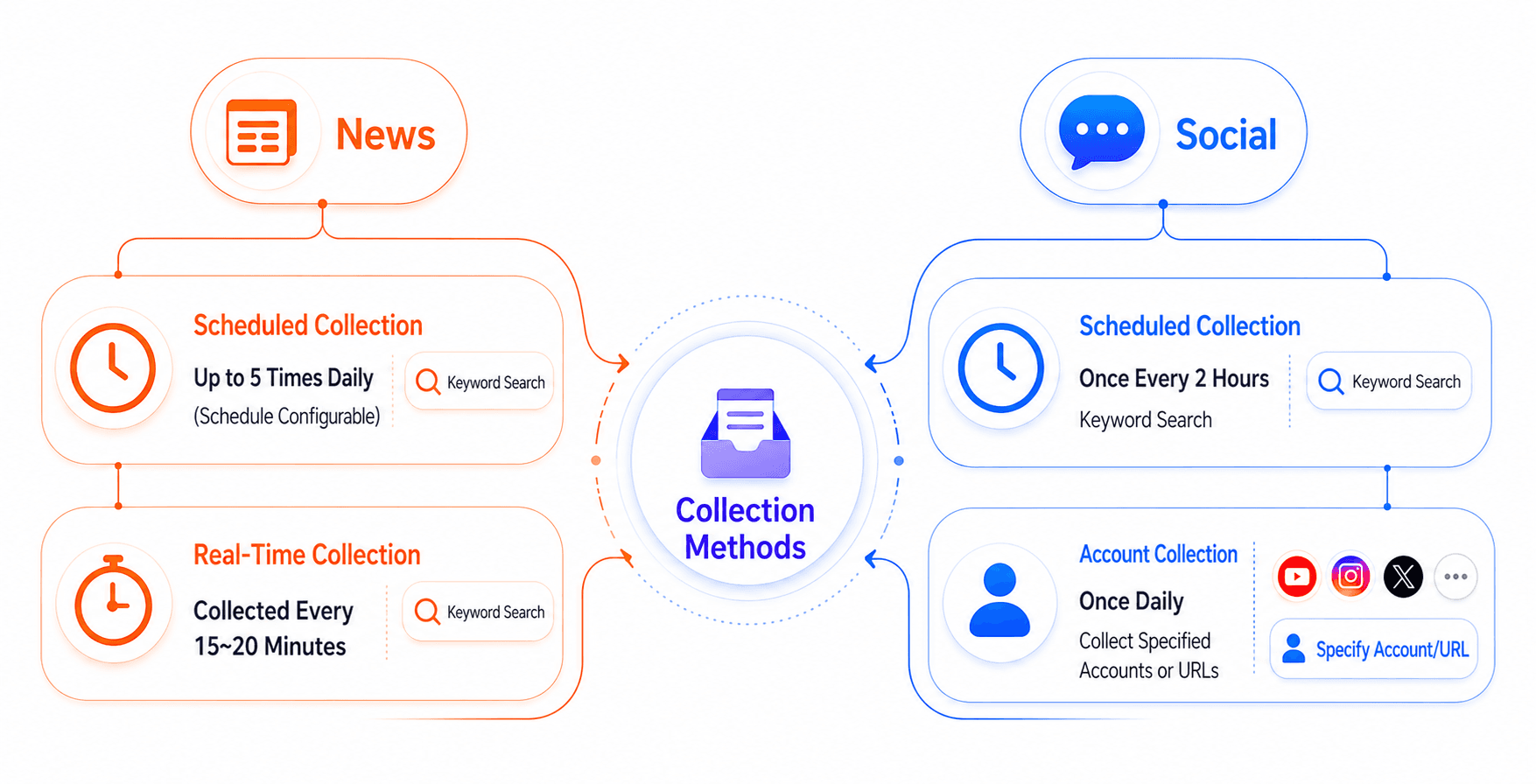
News data is operated through either scheduled crawling or real-time crawling depending on the analysis purpose. Scheduled crawling runs reliably at designated times up to five times a day, while real-time crawling reflects the latest issues immediately through high-frequency collection every 15 to 20 minutes.
Social mediaSocial-media data from blogs, cafés, and communities is collected once every two hours. Beyond default collection, more precise acquisition is possible through URL-based custom collection settings for specific influencer accounts or community boards that require focused monitoring.
Flexible Data Collection
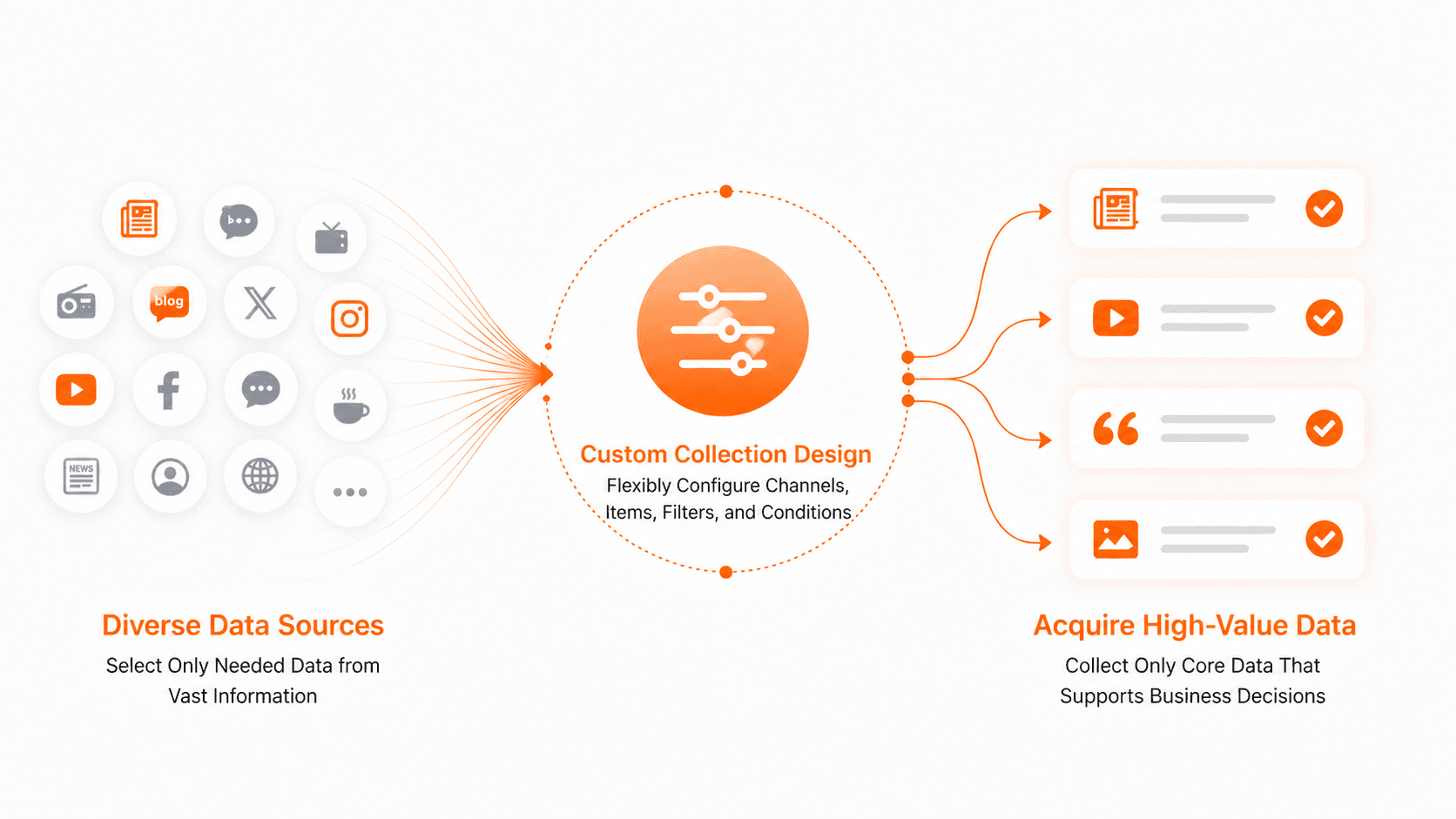
Rather than relying on a rigid mass-collection approach, we secure only the data required for the analysis purpose.
To maximize analytical efficiency, not only collection channels and specific media outlets but also the detailed fields collected can be adjusted and optimized flexibly according to client requirements.
The goal is not simply to accumulate a large volume of data, but to build a collection environment that selects only the high-value data that materially supports business decisions.